
TECHNICAL PRODUCT INFORMATION

Luma Guidewire

Precision at the Core of Minimally Invasive Procedures

Guidewires are essential for navigating complex vascular pathways during minimally invasive procedures. Their performance depends on a carefully balanced combination of mechanical properties, surface characteristics, and material functionality.

Luma Wire Tech provides precision fine wire solutions for guidewire applications. Through a combination of advanced wire materials, precision manufacturing, surface engineering, and plating technologies, we help customers achieve the performance characteristics required for demanding medical devices.
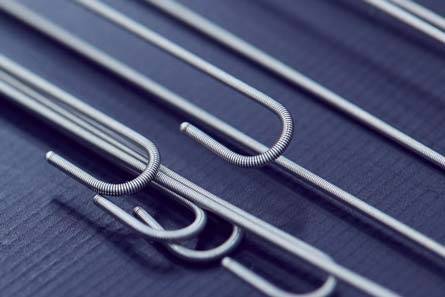
Luma Guidewire: Gold-plated tungsten wires for medical devices used in guidewires

Specifications

Luma’s guidewire wires is available in a wide range of specifications to meet the requirements of advanced applications

  • Diameter range: 60–120 µm
  • Different alloys
  • Tight tolerances for high-precision applications
  • Available cut-to-length or in continuous lengths

Core Materials

  • Tungsten
  • Stainless steel
  • Custom wire solutions

Surface Treatment

  • Electropolishing
    • Edged
    • Polished

Plating Options

  • Gold
  • Platinum
  • Palladium
  • Silver
  • Rhodium

How Stainless Steel Wire Enhances Guidewire Performance

Guidewires require a careful balance of flexibility, strength, torque transmission, and long-term reliability. Stainless steel has long been one of the most widely used materials in guidewire construction due to its ability to provide predictable mechanical performance while maintaining excellent formability.

Flexibility and Control

Accurate positioning is essential when navigating complex vascular pathways.

  • High density enables excellent radiopacity, making the guidewire clearly visible under X-ray
  • Used in marker bands and coils, especially at the tip, for precise positioni
  • Supports safer procedures and improved clinical outcomes

Torque Response

Effective torque transmission is critical when physicians need to steer a guidewire through challenging anatomy. Stainless steel provides reliable torque response, helping translate rotational movement from the proximal end to the distal tip.

Mechanical Strength

Guidewires are subjected to bending, twisting, and repeated manipulation during procedures. Stainless steel offers a combination of strength and ductility that supports reliable performance under demanding conditions.

Fatigue Resistance

Repeated flexing can lead to material fatigue over time. Stainless steel provides good fatigue resistance, helping maintain guidewire integrity throughout the procedure.

Processability and Manufacturing Consistency

The combination of mechanical performance and formability makes stainless steel well suited for precision manufacturing processes used in advanced guidewire construction.

How Tungsten Wire Enhances Guidewire Performance

In guidewire applications, material choice directly impacts visibility, control, and overall performance. Tungsten plays a critical role in solving several key challenges in minimally invasive procedures.

Enhanced Visibility Under Fluoroscopy

Accurate positioning is essential when navigating complex vascular pathways.

  • High density enables excellent radiopacity, making the guidewire clearly visible under X-ray
  • Used in marker bands and coils, especially at the tip, for precise positioni
  • Supports safer procedures and improved clinical outcomes

Improved Torque Control and Navigation

Guidewires must respond precisely to the physician’s movements.

  • High stiffness and strength enable efficient torque transmission
  • Enhances control when navigating narrow and tortuous vessels
  • Supports predictable and responsive handling

Ultra-Fine Dimensions Without Compromising Strength

Miniaturization is critical in modern medical devices.

  • Tungsten enables extremely fine wire diameters while maintaining structural integrity
  • Supports thinner designs without compromising performance
  • Enables greater flexibility in advanced device development

Enhanced Radiopacity with Gold-Plated Tungsten

For applications requiring maximum visibility, gold-plated tungsten wires provide an additional level of performance.

  • Gold plating further enhances radiopacity, improving visibility under fluoroscopy
  • Enables clearer distinction and more precise positioning
  • Combines tungsten’s mechanical strength with optimized surface properties
  • Supports advanced designs where both visibility and performance are critical

High-Temperature Stability for Advanced Manufacturing

Tungsten’s extremely high melting point (3,422 °C) is not only a material property, it is a key advantage in the manufacturing of high-performance guidewires.

It enables precise, reliable processing without compromising the wire’s mechanical integrity.

Guidewires often combine multiple materials, such as tungsten tips with stainless steel or nitinol cores.

  • Withstands high-intensity laser welding without deformation
  • Enables strong, precise micro-joints
  • Maintains mechanical properties near the weld zone
  • Supports precise coil formation without material degradation

Download our technical overview of ultra-fine wire solutions

Gold-plated, polished and clean metal wires for demanding technical applications.

Luma wire tech, ultra-thin wire technology and wire plating expertise.

Have a technical question before you leave?

Our team support demanding wire applications.